Free antivirus software has never been better. Windows Defender handles the basics solidly, and options like Bitdefender Free and Avast One Basic add meaningful protection at zero cost. So why do millions of people still pay $30 to $70 a year for a premium antivirus?
The honest answer is that paid antivirus is not for everyone. But for specific types of users in specific situations, the upgrade is not just worth it. It is overdue. This guide gives you a clear framework to decide which camp you fall into.
For context on what free tools actually cover, read our Best Free Antivirus Software in 2026: Top 5 Tested and Ranked guide first. And if you are still deciding whether Windows Defender alone cuts it, our Is Windows Defender Enough in 2026? article covers that question directly.
What paid antivirus actually adds over free?
Before getting into specific scenarios, it helps to understand what you are actually paying for. The gap between free and paid antivirus is not primarily about malware detection. Bitdefender Total Security combines excellent detection rates with minimal performance impact and a solid feature set, but its free version already offers strong core detection. The real difference lies in everything around that core.
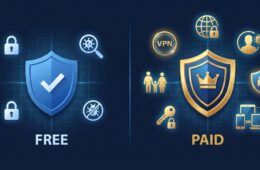
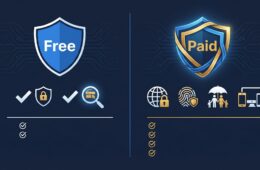
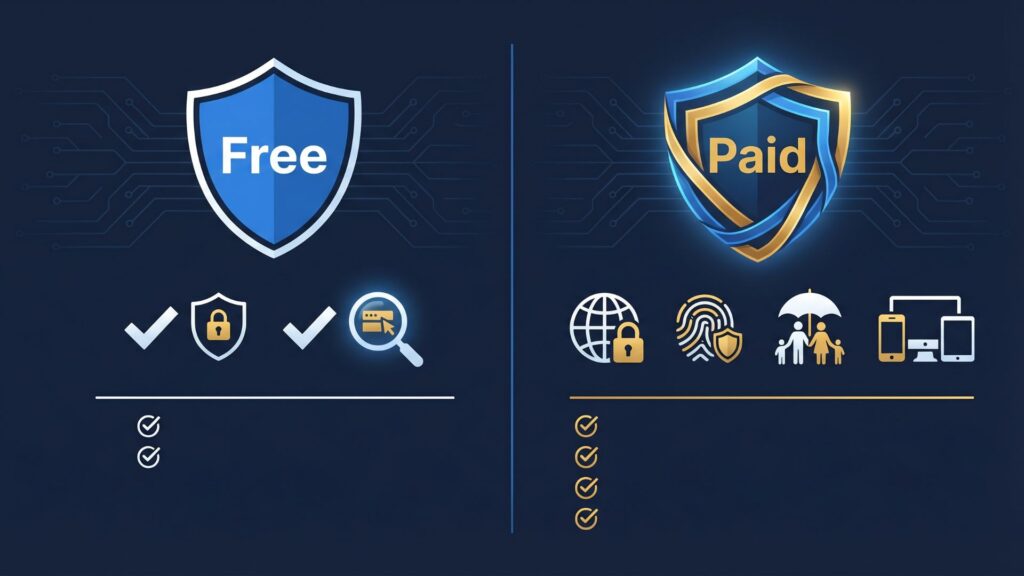
Paid antivirus suites typically add:
- Unlimited VPN access
- Dark web monitoring and identity alerts
- Password manager
- Parental controls
- Multi-device coverage under a single license
- Priority customer support
- Advanced ransomware rollback
- Cross-browser phishing protection
Paid versions catch threats faster and come with extras like dark web monitoring and a password manager. If you store important data on your device, the paid tier is worth the cost.
The question is not whether paid antivirus is better. It almost always is. The question is whether those extras justify the price for your specific situation.
7 Clear signs you should upgrade to paid antivirus
1. You work from home with client or business data
This is the clearest upgrade signal. If you handle sensitive professional data, are a freelancer managing client contracts or personal information, a small business owner with customer data on your machine, or anyone for whom a breach would have professional or legal consequences, the calculation changes significantly.
A data breach that affects your personal files is inconvenient. A breach that exposes client data or business records can end a career or trigger legal action. The cost of a paid antivirus is trivial compared to that risk.
2. You use public Wi-Fi regularly
Coffee shops, airports, hotels, coworking spaces. Every time you connect to public Wi-Fi without a VPN, your traffic is potentially visible to anyone else on that network. Whether the paid tier makes sense really comes down to what’s on your device and how often you connect to public Wi-Fi.
Most free antivirus tools offer a limited VPN, usually 200 to 500 MB per day. That covers a quick email check but nothing more. A paid suite gives you unlimited VPN access built into the same app, which is often cheaper than buying a standalone VPN separately.
3. You share devices with family members or children
Norton 360 is the all-in-one antivirus solution that provides every cybersecurity tool you could possibly need and will provide top-tier protection for multiple devices. Family plans from Norton, Bitdefender, and McAfee typically cover 5 to 10 devices under a single subscription.
If you have children using the same machine or their own devices, parental controls become a core feature rather than a luxury. Free antivirus tools almost never include parental controls. Paid family plans almost always do.
4. You download software frequently
If you regularly download software from unofficial sources, cracked software and downloads from dubious sites are responsible for a disproportionate share of infections. No antivirus fully compensates for this, but a paid product with stronger behavioral detection is better than Defender alone in this scenario.
Even for users who stick to legitimate sources, frequent downloads from developer sites, freeware platforms, and file-sharing services introduce meaningful risk. Paid antivirus tools run deeper behavioral analysis on new files before they execute.
5. You Use Chrome or Firefox as your primary browser
As covered in our Is Windows Defender Enough in 2026? guide, SmartScreen phishing protection only works inside Microsoft Edge. If you browse primarily in Chrome or Firefox, you lose a significant layer of protection.
Although some devices may have built-in protection against viruses, using third-party antivirus software remains essential in 2026 for total protection with endpoint protection and response, and blocks against malware and potentially unwanted programs. Paid antivirus suites include browser extensions that protect you across all major browsers, not just Edge.
6. You are concerned about identity theft
Dark web monitoring is exclusively a paid feature across all major antivirus brands. It continuously scans dark web databases for your email address, phone number, social security number, and financial details, alerting you the moment your information appears in a known data breach.
The identity monitoring tools are what differentiate Norton 360. If protecting personal information matters as much as protecting your PC, Norton 360 is worth the higher price. For anyone who shops online, banks digitally, or stores personal documents on their device, that monitoring adds a layer of protection that no free tool provides.
7. You run an older or slower machine
This one surprises people. Free plans cover the basics and not much else, and support is basically nonexistent. More importantly, some free tools are poorly optimized and run heavy background scans that slow older hardware significantly.
Premium tools from Bitdefender and ESET are specifically engineered for low system impact. If your machine already struggles with performance, a well-optimized paid antivirus can actually feel lighter than a bloated free alternative.
When you should stay free?
Upgrading is not always the right call. Here are the situations where free protection is genuinely enough.
If you browse carefully and keep Windows updated, Windows Defender is usually enough for low-risk users in 2026. No upgrade needed as long as your habits stay smart and your settings are in good shape.
Stay with free antivirus if you:
- Use one device for basic browsing, email, and streaming
- Stick to mainstream websites and official app stores
- Never connect to public Wi-Fi without caution
- Do not store sensitive work or financial data locally
- Already use a separate VPN and password manager
A careful, informed person running Defender with sensible habits is more secure than a careless person running a premium paid suite. Software is a backstop, not a substitute for judgment.
What does paid antivirus actually cost?
| Product | Starting Price | Devices | Key Extra |
| Norton 360 | $29.99/year | 1-5 | LifeLock identity protection |
| Bitdefender Total Security | $29.99/year | 5 | Lowest system impact |
| McAfee Total Protection | $39.99/year | Unlimited | Identity monitoring |
| TotalAV | $19.00/year | 3 | Beginner-friendly interface |
| Surfshark One | $28.00/year | Unlimited | Bundled VPN |
One important caveat: introductory offers look cheap. Then renewal pricing shows up and it is higher. That is normal in this industry, though it still catches people off guard. Always check the renewal price before committing, not just the first-year promotional rate.
The simple rule
If your answer is yes to any of the following questions, upgrade to paid antivirus:
- Do you work with data that is not entirely yours?
- Do you regularly use public Wi-Fi?
- Do you share your device with children?
- Do you want identity theft monitoring?
- Do you use Chrome or Firefox as your main browser?
If your answer is no to all five, a well-configured free antivirus paired with smart browsing habits will protect you just fine in 2026.
Given how much cyberthreats have evolved this year, which of these upgrade triggers resonates most with how you actually use your devices day to day?